Wrong context
The model never receives the record, policy, or prior decision that the task depends on.
Harness fix · retrieval + rankingAt Feniex · Eve checks the exact record before quoting a price or warrantyThe Agentic Harness.
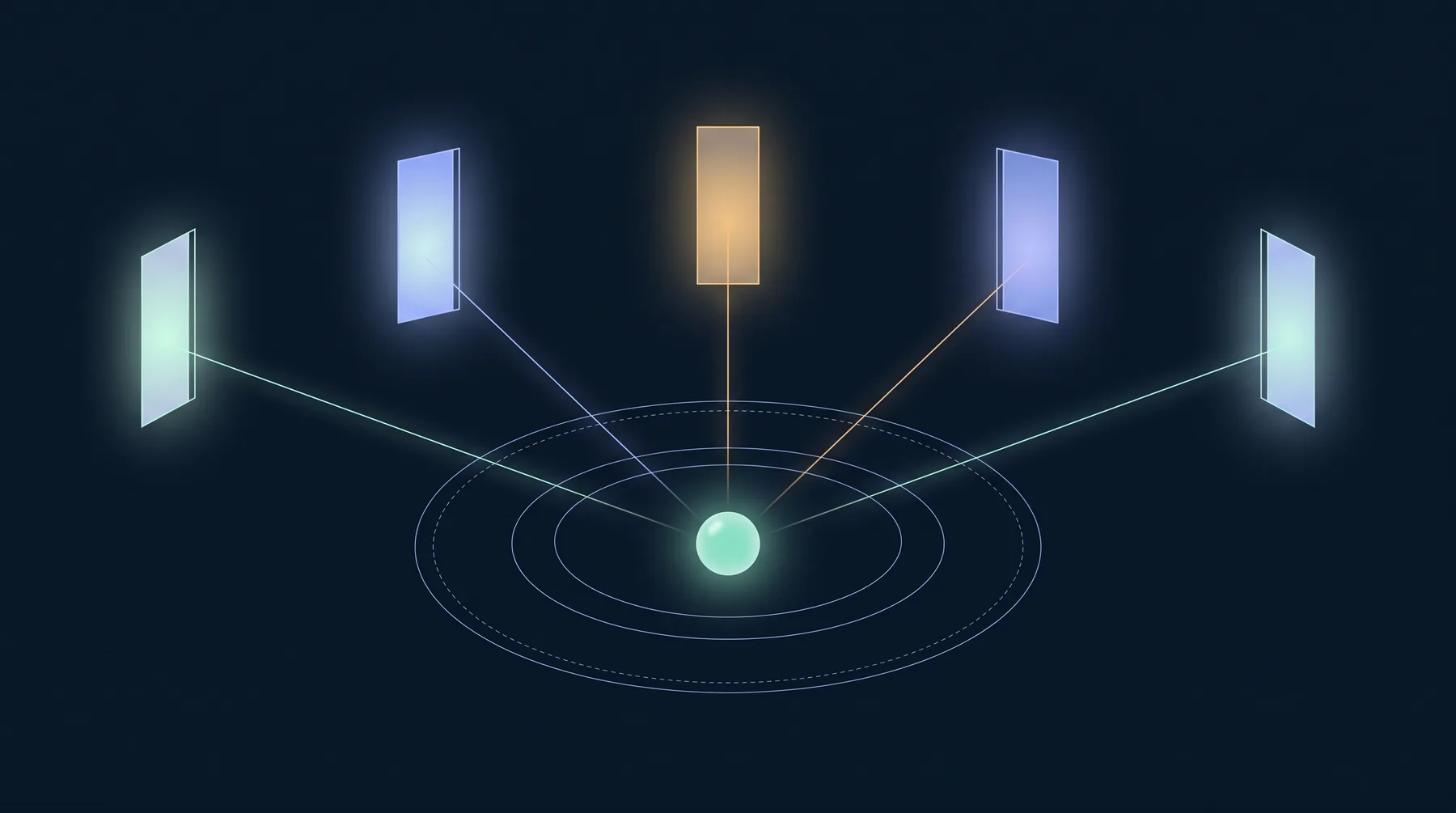
A language model can reason. An agent can act. But only an Agentic Harness can reliably connect what the model knows, what the business allows, what the tools can do, and how the result gets checked.
Many failures blamed on the model are actually failures of the architecture around it.
It is the engineered environment that turns a model from a responder into a participant in real work.
The model is only one component. It does not arrive knowing which documents matter, which records are current, which tool is safe, what should persist, or whether a task was actually completed.
The harness makes those decisions explicit. It retrieves and ranks information, assembles a usable context, carries forward selected memory, exposes bounded capabilities, manages the sequence of work, checks the output, and knows when to stop—or when to bring in a person.
That surrounding architecture is the difference between an impressive conversation and an agentic system a company can trust with consequential work.
A capable model can still fail inside a weak system. Reliability is distributed across the entire harness.
The model never receives the record, policy, or prior decision that the task depends on.
Harness fix · retrieval + rankingAt Feniex · Eve checks the exact record before quoting a price or warrantyToo much material crowds the working window and important evidence loses priority.
Harness fix · context shapingAt Feniex · a bounded window, short notes, fresh lookupsThe agent forgets task progress, conventions, or decisions and starts reconstructing them.
Harness fix · selective memoryAt Feniex · one conversation record across every doorA tool is available without sufficient limits, permissions, previews, or approvals.
Harness fix · bounded executionAt Feniex · four public actions, and drafting is not sendingThe loop ends because the model sounds finished—not because the outcome was verified.
Harness fix · evaluation + stopping rulesAt Feniex · Eve says only what the result provesEach layer transforms raw capability into usable signal, controlled action, and evidence that the job is done.
Documents, code, tickets, systems of record, and live operating data.
Search, filter, rank, and attach metadata to the best evidence.
Fit instructions, evidence, state, and tool output into working memory.
Interpret the task, form a plan, choose the next useful step.
Read, calculate, draft, execute, or interact within explicit boundaries.
Persist only the decisions and state that improve future performance.
Test completion, quality, policy, cost, and whether another loop is needed.
Enterprise knowledge is larger than a prompt. The harness must decide what to retrieve, how to rank it, and what metadata makes it trustworthy.
Lexical retrieval is strong when exact terms matter: a product ID, file name, error code, or contract clause. Dense retrieval is better at meaning: synonyms, paraphrases, and incomplete descriptions. In enterprise work, a hybrid approach often produces the strongest candidate set, followed by re-ranking.
A customer-facing harness adds one rule: look up the exact record before quoting it. In Deyaf’s design, the model is one step of four: listen, look it up, check the rules, reply.
The harness decides what enters the working window, what stays prominent, what is summarized, and what is left out.
An illustrative allocation, not a measurement. There is no universally perfect mix. The useful principle is intentional composition.
Useful context is not merely related. It is actionable, attributable, and proportionate to the task.
These layers let an agent carry state, affect the world, and move through work in a controlled sequence. In a customer-facing harness, memory alone splits into four kinds, each with one job.
Preserve what improves future work. Discard what only adds noise or risk.
Give the model capabilities with the narrowest permissions that still make the task useful.
Decide what happens next, when to retry, how to route, and where a person enters.
Agentic retrieval can search, inspect, reformulate, and try again. That improves quality—but also spends time, tokens, and operating budget. The harness makes every loop conditional.
The stop rule matters as much as the start instruction.
Improvement is a loop too, and it needs the same discipline: the learning loop behind Eve measures her before anything new is taught, then measures again.
The harness is where permission, policy, approval, observability, and accountability become part of the workflow—not a document beside it.
Good governance is operationally specific. It names who, what, when, and how the system proves compliance. Deyaf publishes its own version as trust and control principles, and its autonomy ladder starts from one line: answering is not acting.
Eve is Feniex’s assistant, and each layer in the pipeline above has a counterpart in how she works. Eve runs on the Agentic Harness Deyaf packages: her knowledge, memory, doors, rules and learning loop.
Eve is Feniex’s warm, composed public face. She helps people choose suitable equipment, make a buying decision, or get support for equipment they already own. She answers first, gives one useful next step, then stops. On the phone she is the overflow line: the team’s phones ring first, and when no one is free or the office is closed, Eve answers instead of voicemail.
Her answers are assembled, not improvised. Before any exact product, compatibility, warranty, price or software claim, she checks the applicable record: a versioned reference layer of catalog, manual, software, fitment and policy records, then a taught library of reviewed lessons found by meaning. A convincing product name is not evidence.
When she doesn’t know, the harness takes over, not the model’s imagination. The unanswered question becomes a durable item for the team, and a support ticket is filed when contact details are available. She says it is with the support team only once the ticket is confirmed as accepted. There are no transfers, by design: on a call she takes a name and number and hands the matter on. That is what happens when she doesn’t know.
What she remembers is split by job: this conversation, one conversation record the team can read across web, email, text and phone, short customer notes, and her library. Notes are never current facts; orders, invoices, shipments and balances are always looked up fresh. Raw conversations never become public knowledge on their own. Your team answers once, the lesson is reviewed, she is measured on a frozen test set, only explicitly approved lessons are published, and then she is measured again.
The governance stack from chapter 08, as it reads in Eve’s harness.
Graded Sep 23, 2026 on 100 fixed test questions. Each bar counts questions out of 100.
As of September 24, 2026 · Feniex’s internal Eve 3.0 report · machine-judged and provisional.
Eve’s report card, weak spots includedEvery layer above stays out of sight. What a customer actually meets is a small box on a web page and a phone line that rings. The same identity, library and rules stand behind both; only the delivery changes at each door.
The smallest, most visible door. The reply streams in as it is written, the page and the product in view ride along, and an answer can carry a structured product or resource tile. Its history is bounded to this one conversation.
Overflow and after hours. The team’s phones ring first; when no one is free or the office is closed, Eve answers instead of voicemail: Hello, this is Eve, Feniex’s intelligence. How can I help you?
No transfers, by design. Routing in is overflow: the team first, then Eve. Routing out is a hand-off of details, never a transfer: she answers from her library, or takes the caller’s name and number and hands the matter to the team. In chat, an unanswered question becomes a durable item, and she says “with the support team” only once the ticket is confirmed accepted. How Eve works the overflow line
Control describes the discipline of the system, not the size of the customer. A smaller company can need the same provenance, permissions, and human control as a global one.
Start with a focused outcome and a few trusted systems. Preserve source, ownership, and approval from the first day.
Start with a front desk that knows↗Extend the harness department by department without duplicating logic, identity, or operational truth.
Answers for every team, from one library↗Operate across complex systems while keeping access local, writes bounded, and every consequential action accountable.
What the assistant can and cannot do↗Before debating whether the model is smart enough, inspect the operating environment it has been given. Then grade it the way Eve is graded: on a fixed test, hard cases kept in.
What evidence does this task require, who owns it, and how will retrieval quality be measured?
What must remain visible, what can be summarized, and what should never enter the working window?
Which decisions improve future work, how long should they persist, and who can correct them?
Which tools are necessary, what is the minimum permission, and where must the system preview before acting?
When should the agent retry, reformulate, route, ask a person, or stop?
What observable evidence proves the outcome is correct, complete, safe, and worth the operating cost?
Which identities, policies, approvals, and audit events must be inside the workflow?
How will quality, latency, cost, permissions, and failures be monitored over time?
This editorial interpretation draws on the ODSC article “What is an Agent Harness? The Architecture Behind Reliable Agentic AI”. The architecture, diagrams, commentary, and Deyaf framing on this page are original to Site Number Three.
These sources describe the wider field. None of them reviewed or endorses Deyaf, and none describes how Eve is built.
Deyaf packages the harness behind Eve so your business can have an assistant of its own. Start in the builder: about ten minutes to a knowledge preview and a saved setup, no account needed.
Build your assistant