The Harness Gazette

Everything around the model, reported

Vol. I · No. 9 Friday, September 25, 2026 Published by Deyaf A 19-minute read Extra · Free

Extra

Extra: The Harness Era

Industry names everything around the model; “harness engineering” arrives in twelve February days

Forecasters warn of cancellations as builders learn the loop is the easy part. At Feniex, an assistant named Eve answers the phone when the team can’t.

A stipple engraving of a 1920s telephone switchboard: rows of jacks and patch cords, a desk lamp switched on, and an empty swivel chair pushed back from the board.
The switchboard, before anyone called it a harness. Every call that reaches a business has always passed through something: a board, a desk, a rule about who picks up. The chair is empty; the lamp is on. Engraving for The Gazette; mood, not a record. Hover over it, or focus it, to see the dot screen.

The lead

In Twelve February Days, the Industry Found Its Word

An engineer, OpenAI, martinfowler.com and LangChain all wrote about “harness engineering.” The practice was older. The name made it a discipline.

For three years the industry argued about models. This year it started talking about everything else.

On February 5, Mitchell Hashimoto published an essay on how he came to rely on AI agents, and one step carried a name: engineer the harness. When an agent errs, you do not merely correct it; you “engineer a solution such that the agent never makes that mistake again,” with a new instruction line or a real tool.

Six days later, OpenAI described a product built over five months with no hand-written code: about a million lines and roughly 1,500 pull requests, steered by a short instructions file that worked as a map, not an encyclopedia. On February 17, Birgitta Böckeler read that account as three disciplines, and LangChain reported that changing only the harness around the same model lifted its coding agent from 52.8 to 66.5 on Terminal Bench 2.0 vendor-reported.

The word stuck because it named what practitioners already knew: the model is the engine, and the harness is what makes it useful and safe. If behavior gets fixed in the harness, then value, risk and lock-in live there too. The rest of this edition follows that thread.

Continued on A2 →
DevelopingOne question, followed through the harness

A caller rings after hours. Move the press run to reset this story for each edition as the question travels: asked, checked, then answered with the source or handed to the team.

Illustrative example: not a live Eve transcript

Plan of the harness, drawn as a building one question walks through Five rooms. 1, the door, where the call arrives. 2, the library of records, manuals and taught lessons. 3, the copy desk, where the rules are checked. Then one of two endings: A, the writer, where the model composes a reply with the source that goes back through the door; or B, the team, where the caller's details become a confirmed ticket and the question returns to the library as a lesson once a person answers it. 1 DOOR phone · chat · text · email 2 LIBRARY records · manuals · lessons 3 COPY DESK the rules, checked A WRITER the model: 1 step of 4 B TEAM ticket, confirmed the caller, 9:47 p.m. the reply, with its source a lesson, taught once
Fig. 1 · Plan of the harness. Numbered rooms are the steps of one answer; lettered rooms are the two possible endings. The blue dot is where the question stands in this edition. Drawn for The Gazette; illustrative, not an architecture diagram. On a small screen, swipe the plan sideways; it pans to follow the question.

Early edition9:47 p.m.

After Hours, a Caller Asks: Is My Unit Still Under Warranty?

The office has closed and no one is free. The overflow line picks up instead of voicemail.

The team’s phones ring first, as they always do. Tonight nobody answers, because nobody is in. Instead of voicemail, the call reaches Eve: “Hello, this is Eve, Feniex’s intelligence. How can I help you?” The caller wants to know whether equipment bought a while ago is still covered. It sounds simple. It is exactly the kind of question an assistant can get confidently wrong.

Late editiona moment later

Before She Answers, Eve Checks the Record

A product name is not evidence. The applicable policy is, and she says aloud that she is looking.

“Let me check on that,” she says as the lookup starts, so the line never goes dead. The harness goes to its exact reference layer, the versioned policy and product records, not to anything she half-remembers. The applicable warranty record is checked before any exact claim is made. The rules also mark an edge. She can explain what the terms cover; a verdict on one particular unit needs its original purchase terms checked.

Final edition · Plate Aseconds later

Answered, With the Source, and Then She Stops

Two or three sentences, one useful next step, no promise she cannot keep.

The policy covers the question, so she answers from it: what the warranty terms say, the one detail the caller should check on the original purchase, and what to do next. Then she stops. No sales pitch rides along with a support answer, and no refund, repair or callback time is promised. The exchange lands in the conversation record, where the team can read it in the morning.

Final edition · Plate Bseconds later

Record Silent; the Caller’s Details Go to the Team

No transfer and no invented answer: a ticket, and words that match what actually happened.

The records do not settle it, so unknown stays unknown. Eve takes the caller’s name and number and files the matter for the team. She says it is “with the support team” only once the help desk confirms it accepted the ticket; until then, she says the details are saved. The question also joins the teach queue. A person answers it once, it is checked, then taught, and later callers get the approved answer.

How the four steps fit inside one answer: the model is one step of four

System weather illustrative model

9 p.m.

Office closed. The assistant keeps the night watch.

Phones
No one in. The assistant answers instead of voicemail.
Approvals
Desk closed. Nothing that needs a yes leaves until morning.
Hand-offs
Tickets are filed for the team. No callback time is promised.
Library
Steady at every hour: same records, same rules, every door.

Conditions at a harnessed front desk through one day: a teaching model, not live telemetry. For the real anatomy, see four steps in about three seconds.

A2The Harness GazetteFriday, September 25, 2026
Continued from A1

What a Harness Is, and Why a Newsroom Is the Best Way to Picture One

A model on its own is a gifted writer who knows nothing about your business. Everything that makes it trustworthy is built around it.

Start with what a model is by itself: a fluent writer that has read a great deal and can produce plausible sentences about anything, which is precisely the danger. Ask it about your warranty terms and it will write something that sounds like warranty terms.

A harness turns that writer into a reliable employee, and the easiest way to picture one is the newsroom that printed this page. A paper does not run whatever its best writer types. The writer gets the file from the library; the copy desk checks every name and number against the record; the standards desk decides what the paper may say; circulation decides where the edition goes; and the corrections column makes sure a mistake is fixed once, in public, and not repeated.

An Agentic Harness has the same departments. Knowledge is the library: the exact records and reviewed lessons the assistant may use. Memory is the morgue, the newspaper’s archive, with the same rule that an old clipping is history, not today’s fact. The doors are circulation. Permissions are the standards desk. The learning loop is the corrections desk. Deyaf compresses one answer into four steps: listen, look it up, check the rules, reply. The model is one step of four.

Practitioners have their own vocabularies. Böckeler sorts a harness into guides, which steer an agent before it acts, and sensors, which catch problems after; some are plain code, some are another model’s judgment. Anthropic’s engineers note that every harness component encodes an assumption about what the model cannot yet do, and that those assumptions go stale as models improve, so a good harness is pruned as well as built. Philipp Schmid calls the model the CPU and the harness its operating system.

The vocabularies differ; the lesson does not. Reliability is not a property of the model. It is designed around it.

har·ness n., 2026 sense

An Agentic Harness is everything around the AI model: what the assistant knows, what it remembers, where it meets customers, what it may do, and how your team teaches it.

Deyaf’s definition. See how an Agentic Harness works.

Also printed as“Agent = Model + Harness” (LangChain, Mar 10) · model as CPU, harness as operating system (Schmid, Jan 5) · model as brain, harness as body (Databricks, Jun 17).

Masthead of a Harness

The writerthe model
Writes every reply; knows nothing until handed the file.
The libraryknowledge
Catalog, manuals, policies, reviewed lessons.
The morguememory
An archive: old clippings are history, never today’s facts.
Circulationthe doors
Chat, voice, phone, text, email.
Copy deskevidence rules
Check the record before any exact claim.
Standardspermissions
What it may do; what waits for a yes.
Correctionsthe loop
A person answers once; checked, then taught.
The editoryour team
Nothing consequential prints without one.
Fig. 2 · The newsroom metaphor, as a staff box. An editorial device, not a product diagram.

Timeline

The Twelve Days the Word Arrived: February 2026

Select an inked date for its dispatch; arrow keys move between them.

    1. Feb 5Thursday

      Hashimoto names the practice

      In “My AI Adoption Journey,” Mitchell Hashimoto’s fifth step is “Engineer the Harness”: every agent mistake becomes a permanent fix, an instruction line or a tool.

    2. Feb 9Monday

      Stripe describes “Minions”

      Unattended coding agents produce more than 1,000 merged pull requests a week, every one reviewed by a person, with at most two CI runs each company-reported.

    3. Feb 11Wednesday

      OpenAI: “Harness engineering”

      Five months, about a million lines, roughly 1,500 pull requests, no hand-written code. The summary fits on a button: “Humans steer. Agents execute.”

    4. Feb 17Tuesday

      Three dispatches in one day

      Böckeler reads the OpenAI post on martinfowler.com as context engineering, architectural constraints and garbage collection. LangChain reports its harness-only jump, 52.8 to 66.5 vendor-reported. NIST launches its AI Agent Standards Initiative, including work on agent identity and authorization.

    Before: Schmid’s “The importance of Agent Harness in 2026” (Jan 5). After: LangChain’s “Agent = Model + Harness” (Mar 10) and Böckeler’s guides-and-sensors essay (Apr 2). Wikipedia’s entry notes the term’s origin is contested.

    A3The Harness GazetteFriday, September 25, 2026

    Forty Percent, Four Ways: The Market Sobers

    Forecasters see cancellations and demotions; surveys see agents in production. Read the footnotes: the same number measures four different things.

    If February gave the industry a word, the forecasts gave it a hangover. In June 2025 Gartner predicted that more than 40 percent of agentic AI projects would be canceled by the end of 2027, citing cost, unclear value and weak risk controls, and estimated that only about 130 of the thousands of vendors selling “agents” were the real thing.

    In May 2026 it went further: 40 percent of enterprises will demote or decommission autonomous agents by 2027, it said, because governance gaps surface only after incidents. Its remedy was four autonomy levels, from observe to act autonomously, and a warning that approvals degrade under time pressure.

    The surveys read busier. McKinsey found 40 percent of large organizations scaling agents. LangChain’s survey of 1,340 practitioners found 57.3 percent with agents in production, and named quality, not cost, as the leading barrier.

    Both can be true. Gartner’s stated causes, cost, unclear value and weak controls, are harness problems, not model problems. Its remedy reads like a harness specification: govern by level, not with one rule for everything.

    Fig. 3 · The market in seven numbers

    Survey resultForecastEarlier value
    1. Gartner press release, June 25, 2025. A prediction, not a measurement; causes cited were cost, unclear value and weak risk controls.
    2. Gartner, May 26, 2026. Proposes four autonomy levels and warns that approvals degrade under time pressure or fatigue.
    3. Gartner, August 26, 2025. Share of enterprise applications, not of companies; up from under 5% in 2025.
    4. McKinsey, “The state of AI in 2026,” August 25, 2026. Organizations with more than $1 billion in revenue.
    5. LangChain, “State of Agent Engineering,” June 12, 2026; 1,340 respondents to a vendor’s survey.
    6. Same LangChain survey. Quality ranked first among barriers.
    7. McKinsey, August 25, 2026: respondents who skipped a software purchase because they could build with agents.
    B1The Harness GazetteFriday, September 25, 2026

    Lock-In Moves From the Model to the Harness

    The model is becoming a setting you can change. What you cannot swap out so easily is everything wrapped around it.

    For a while the fear was being locked into a model. By September the argument had flipped. On September 1, Kai Waehner wrote that “the model is a config setting and the harness is your architecture.” He walked through the layers around the model, from tool connectivity to the runtime, named context and memory the stickiest by far, and proposed exit questions for every buyer: can you export your definitions, where does your context live, and who owns the audit trail?

    Databricks made the same point from the builder’s side. “The core agent loop is just 1% of the work,” it said at its June summit; the rest is capacity, deployment, security, evaluation, monitoring, context and sharing. Days earlier it had introduced Omnigent, an open “meta-harness” that sits above other harnesses to compose and govern them.

    The model is a config setting and the harness is your architecture.Kai Waehner, September 1, 2026

    For a small or mid-sized business, the reading is simpler. The assets that matter are the ones you would rebuild if you switched: approved knowledge, rules, the record of conversations, taught lessons, and the decisions about which door does what. Those should be yours and legible, whatever model sits in the middle.

    That is why Deyaf treats a customer-owned data boundary as a principle, and why it suggests you start with one good job. A harness that begins narrow is easier to understand and easier to measure.

    Fig. 4 · The Harness Exchange

    Stickiness by layer, as the Gazette ranks it. Waehner (September 1, 2026) names context and memory the stickiest layer; the rest of the order, the glosses and the ▲ scale are ours, illustrative, not measured.
    LayerGazette glossSticks
    ToolsShared protocols make them portable.▲▲▲▲▲
    Agent loopMuch the same from framework to framework.▲▲▲▲▲
    GuardrailsThey encode your policies.▲▲▲▲▲
    RuntimeDeployment, identity, traces.▲▲▲▲▲
    Context & memoryYears of your knowledge and history.▲▲▲▲▲
    C1The Harness GazetteFriday, September 25, 2026

    The Protocol Goes Stateless

    The July 28 specification of the Model Context Protocol drops the session handshake. Standards move the plug; the house stays yours.

    The summer’s big technical story was about plumbing. On July 28 the Model Context Protocol, the open standard many agents use to reach tools and data, published a major revision. The core became stateless, confirmation can happen mid-request, and long-running tasks became an extension. Its TypeScript and Python SDKs had each passed a billion downloads.

    The governance changed hands earlier. In December 2025 the Linux Foundation formed the Agentic AI Foundation to hold MCP, the goose framework and the AGENTS.md convention under neutral governance, counting more than 10,000 published MCP servers at launch.

    Why should a harness reader care? A shared protocol makes tools portable between harnesses, the least sticky layer on the Business page. The decisions about what an assistant may touch, and on whose authority, stay in the harness. NIST’s February initiative makes the same point from the security side: agents need their own scoped identities, not borrowed service accounts.

    D1The Harness GazetteFriday, September 25, 2026
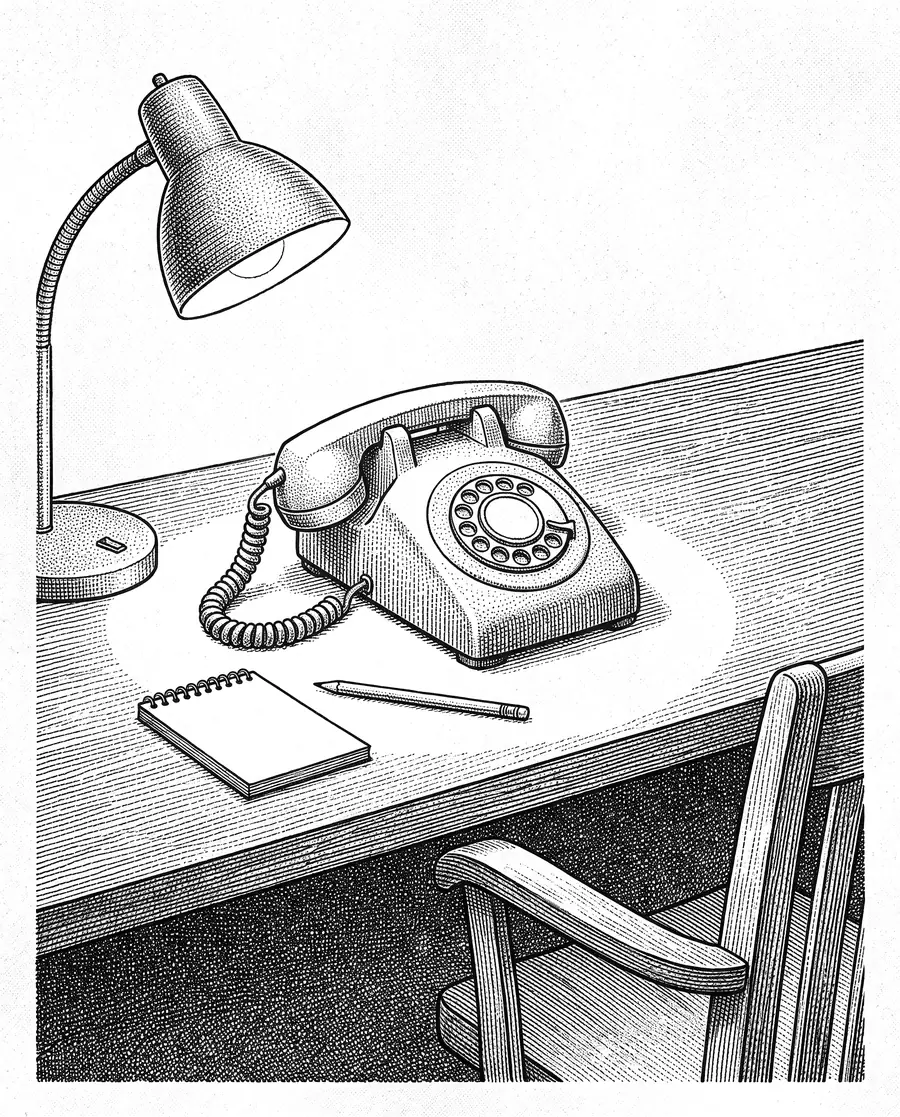
    A stipple engraving of a rotary desk telephone under a lamp at night, a notepad and pencil beside it and an empty chair pulled up to the desk.
    After hours. The team’s phones ring first. When no one is free, the call does not end in a voicemail box. Engraving for The Gazette; mood, not a record.

    The local lead

    At Feniex, Eve Answers When the Team Can’t

    The overflow line rings the people first. When no one is free, or the office has closed, the assistant picks up instead of voicemail: in five languages, with no transfers, by design.

    One of the year’s harness stories is not in a lab. It is on a phone line. At Feniex (say it like “Phoenix”), the team’s phones ring first. When everyone is on another call, or the office has closed, the call goes to Eve, who opens the same way every time: “Hello, this is Eve, Feniex’s intelligence. How can I help you?”

    Eve is Feniex’s warm, composed public face: a knowledgeable customer desk that helps people choose suitable equipment, make a buying decision, or get support for equipment they own. She is software with a name, not a person, with no age and no pretense otherwise. She answers first, gives one useful next step, then stops. She asks for one missing detail at a time and never tacks a sales pitch onto a support answer.

    On the phone, the harness does work the caller never sees. Dead air sounds like a dropped call, so she is designed never to go silent: “One moment” if the line goes quiet for about a second and a half, “Let me check on that” as a lookup begins, “Still checking” every few seconds after. Every call is transcribed; a recorded fallback plays if she is ever down; calls run ten minutes at most. And there are no transfers, by design. She answers from her library, or takes the caller’s name and number and hands the matter to the team. For an emergency, she tells people to call 911.

    The same assistant speaks English, Spanish, French, Portuguese and Arabic, from one library, not five. A question in Spanish is rendered into English to search the single library, and the answer returns in Spanish, in that language’s own fixed voice. Detection and translation run separately from the main answering model.

    What she may do is deliberately small: look something up, search the taught library, take a message, record an unanswered question. The tool list and server-side queries enforce that scope. Before any exact claim about a product, compatibility, warranty, price or software, she checks the record, because a convincing product name is not evidence.

    When she cannot answer, the question does not vanish. It becomes a durable unanswered item and, with contact details, a ticket. A person answers it once; it is checked, then taught. She is measured on a frozen test set before anything is taught, and again after: a supervised loop, not fine-tuning. More about her, from whether she is a person to what you can build in about ten minutes, is in the FAQ at the bottom of Meet Eve.

    The Record: Eve at Feniex, by the Numbers

    Dated · weak spots included
    86%handled well,
    100 fixed test questions
    10%material error rate,
    printed beside it on purpose

    Graded September 23, 2026. Critical errors: 0.

    How all 100 answers landed

    • 65 fully answered
    • 17 safely, within limits
    • 4 asked the right question
    • 4 useful but partial
    • 10 material error

    Trend: not a steady climb

    By type: reworded 100% · manuals 95% · trick 95% · real customer wording 80% · past trouble spots 40%, questions she used to miss, kept in the test on purpose.

    The phone line, since September 17

    102calls answered in her
    first week on the line

    86 while the team was busy · 16 after the office closed · 93% of callers stayed and talked · 60 calls’ details handed straight to the team, not left on hold (a hand-off, never a transfer). Hand-offs, September 16–23: 0 lost; every one sent reached the team. About 3 s to a finished reply in chat and on the phone.

    As of September 24, 2026 · Feniex’s internal Eve 3.0 report · machine-judged and provisional. Feniex’s own measurements, not an independent benchmark. Read Eve’s report card (weak spots included).

    D2The Harness GazetteFriday, September 25, 2026

    Local, continued from D1

    Two Doors, One Desk: The Chat Box and the Overflow Line

    The smallest door on a website and the busiest line in the office run on the same identity, the same library and the same rules.

    Most people meet Eve in one of two places. The first is the chat box in the corner of a Feniex web page. Her reply streams in as it is written; the page and the product the visitor is looking at ride along with the question; a product or resource tile can sit beside the answer; and she keeps a bounded history of this conversation only. Website voice works the same way, out loud.

    The manners do not change with the door. She answers first, offers one useful next step, then stops, usually in two or three sentences, and asks for one missing detail at a time. Before any product, compatibility, warranty, price or software claim she checks the exact record, because a convincing product name is not evidence. She never pretends to be a person.

    The second place is the phone. The team picks up first; when no one is free, or the office has closed, Eve answers instead of voicemail. Routing in is overflow: people first, then Eve. Routing out is a hand-off of details, never a transfer: she answers from her library, or takes a name and number for the team, and she never reads web addresses aloud. Callers who speak Spanish, French or Portuguese are answered in that language’s own voice.

    At either door, a question she cannot answer becomes a durable unanswered item and, with contact details, a ticket. She says “with the support team” only once that ticket is confirmed accepted. The phone side is told at length in Eve on the phone.

    E1The Harness GazetteFriday, September 25, 2026

    Situations, Services & Positions

    The four public actions and the three levels, as they would run in the back pages.

    Help wanted An Assistant Who Answers First

    For the front desk. Hands whatever it cannot answer to your team. Must check the record before quoting a price, a part or a warranty. Two or three sentences, then stop. No sales pitches on support calls. Enquire about a front desk that knows.

    Service 1 of 4 Look It Up

    Exact records consulted before any exact claim: catalog, manuals, software, fitment, policy. A convincing product name is not evidence.

    Service 2 of 4 Search the Taught Library

    Reviewed lessons, found by meaning. Written by people, once. Raw conversations never become public knowledge automatically.

    Service 3 of 4 Take a Message

    Name, number and the matter, passed to the team. A named teammate can be reached without their contact details ever being shown.

    Service 4 of 4 Record an Unanswered Question

    Nothing dropped. Every unknown becomes a durable item and, with contact details, a ticket.

    Positions available Three Levels

    1Answer only. Where every assistant starts.
    2Prepare for approval. Nothing leaves until someone says yes.
    3Run an approved task. One named task at a time, with a receipt every time.

    Set per workflow and per channel; no single switch lets her do everything. Answering is not acting.

    Not available Transfers

    The overflow line has none, by design. Details are taken and handed to the team instead.

    Found One Honest Sentence

    “I couldn’t check.” Owner asks that it be used whenever a lookup fails, in place of “it doesn’t exist.”

    E2The Harness GazetteFriday, September 25, 2026

    Letters to the Editor: Six Questions About Eve

    Composite letters, written by the editors from the questions readers ask most. Illustrative.

    Who is she, exactly?

    Sir, is Eve a person, or pretending to be one?

    Curious, in customer service

    The Editor replies: Neither. Eve is Feniex’s assistant, software with a named personality. She has no age, body or life story, and her rules forbid claiming one. Her name and her voice in each language are fixed; Feniex’s approved operators manage her personality, rules and knowledge. A business that builds with Deyaf names its own.

    What does she actually know?

    Sir, where do her answers come from?

    Skeptical, in sales

    The Editor replies: From her library only: an exact reference layer of versioned catalog, manual, software, fitment and policy records, plus reviewed lessons found by meaning. If a fact is not there, she does not invent one.

    Where can a customer reach her?

    Sir, is she only on the phone?

    Out of office

    The Editor replies: At every door: website chat and voice, phone, text and email. One identity and one rulebook; only delivery changes. Texts go back to the sender, email stays in its thread, and the model never chooses a destination. See how the doors work.

    What is she allowed to do?

    Sir, can she refund me?

    Careful, in compliance

    The Editor replies: No. Four public actions and no authority to approve returns, change accounts or place orders. Drafting is not sending, and saving is not delivery. See the Classifieds, E1.

    What if she doesn’t know?

    Sir, will I be left on hold?

    On hold, once

    The Editor replies: She says so. With your details, a ticket goes to the team, and she says “with the support team” only after the help desk confirms it. Read what happens when she doesn’t know.

    Does she remember me?

    Sir, will she know my last order?

    A returning customer

    The Editor replies: In four layers: this conversation, the record the team can read, short customer notes, and her library. Notes are history, never current facts; orders and balances are looked up fresh, and contact details stay apart from published knowledge. See four kinds of memory, each with one job.

    And the question behind all six, how she gets better: the team answers once, and only approved lessons are taught between two measurements. The editors recommend the loop that makes her better.

    A stipple engraving of a wooden mail-sorting cabinet with pigeonholes of letters and parcels, a rubber stamp and a brass letter scale on the counter.
    The letters desk. Every door delivers to the same pigeonholes. Engraving for The Gazette; mood, not a record.
    E3The Harness GazetteFriday, September 25, 2026

    Sources for This Edition, by Page

    Cited for reporting only; none of these sources endorses Deyaf or Eve. Vendor and company figures are marked. Quotations are short and attributed.

    A1 · The lead & A2 timeline

    • Mitchell Hashimoto, “My AI Adoption Journey,” Feb 5, 2026. mitchellh.com
    • OpenAI, “Harness engineering,” Feb 11, 2026. openai.com
    • Birgitta Böckeler, “Harness engineering: first thoughts,” Feb 17, 2026. martinfowler.com
    • LangChain, “Improving Deep Agents with harness engineering,” Feb 17, 2026 (vendor-reported benchmark). langchain.com
    • Stripe, “Minions,” Feb 9, 2026 (company-reported). stripe.dev
    • NIST, “Announcing the AI Agent Standards Initiative,” Feb 17, 2026. nist.gov
    • Wikipedia, “Agent harness,” edited Sep 12, 2026 (definition and history only). wikipedia.org

    A2 · The explainer

    • LangChain, “The Anatomy of an Agent Harness,” Mar 10, 2026. langchain.com
    • Birgitta Böckeler, “Harness engineering for coding agent users,” Apr 2, 2026. martinfowler.com
    • Anthropic Engineering, “Harness design for long-running apps,” Mar 2026. anthropic.com
    • Philipp Schmid, “The importance of Agent Harness in 2026,” Jan 5, 2026. philschmid.de
    • Databricks, “What is an AI Agent Harness?” Jun 17, 2026. databricks.com

    A3 · The market

    • Gartner, over 40% of agentic AI projects canceled by end of 2027, Jun 25, 2025. gartner.com
    • Gartner, 40% of enterprise apps with task-specific agents by 2026, Aug 26, 2025. gartner.com
    • Gartner, uniform governance across AI agents will lead to failure, May 26, 2026. gartner.com
    • McKinsey, “The state of AI in 2026,” Aug 25, 2026. mckinsey.com
    • LangChain, “State of Agent Engineering,” Jun 12, 2026 (vendor survey, n = 1,340). langchain.com
    • Klarna press release, Feb 27, 2024 (company-reported). klarna.com · Bloomberg, May 8, 2025. bloomberg.com
    • Salesforce, Agentforce Customer Zero, Jan 2025 story and live 2026 page (company-reported). story · page

    B1 · Business

    • Kai Waehner, “The AI Agent Harness: where vendor lock-in went after the model became swappable,” Sep 1, 2026. kai-waehner.de
    • Databricks, “Agent Bricks: Data + AI Summit 2026,” Jun 16, 2026. databricks.com
    • Databricks, “Introducing Omnigent,” Jun 13, 2026. databricks.com

    C1 · Technology

    D1 · Local

    • Deyaf, Meet Eve: identity, phone line, languages and the dated report card. agenticharness.com/eve
    • Deyaf, How it works: doors, one answer, memory, permissions, learning, going live. agenticharness.com/how-it-works
    • Eve figures: as of September 24, 2026 · Feniex’s internal Eve 3.0 report · machine-judged and provisional.